
Male contraception refers to birth control methods designed specifically for men to prevent pregnancy by either blocking sperm production, preventing sperm release, or rendering sperm unable to fertilize an egg. Male contraception encompasses both existing methods like condoms and vasectomy, as well as emerging technologies including hormonal approaches, reversible vas occlusion, and immunological methods currently in development. At the global level, male contraception accounts for approximately 25-30% of contraceptive use worldwide, with significant variation across regions and cultural contexts.
Male Contraception
| |
|---|---|
| Category | Contraception, Men’s Health, Reproductive Medicine |
| Research Fields | Reproductive Medicine, Urology, Endocrinology, Pharmacology |
| Also known as: | Male birth control, men’s contraception, paternal contraception |
| Pronunciation: | mayl kon-truh-SEP-shuhn |
| Global usage rate: | 25-30% of contraceptive users worldwide |
| Condom effectiveness: | 85% typical use, 98% perfect use |
| Vasectomy effectiveness: | >99% effectiveness rate |
| Market demand: | 60-80% of men interested in new methods |
| Clinical trials active: | 15+ methods in various development stages |
| Sources: | WHO, Nature Reviews Urology, Guttmacher Institute, Frontiers in Endocrinology |
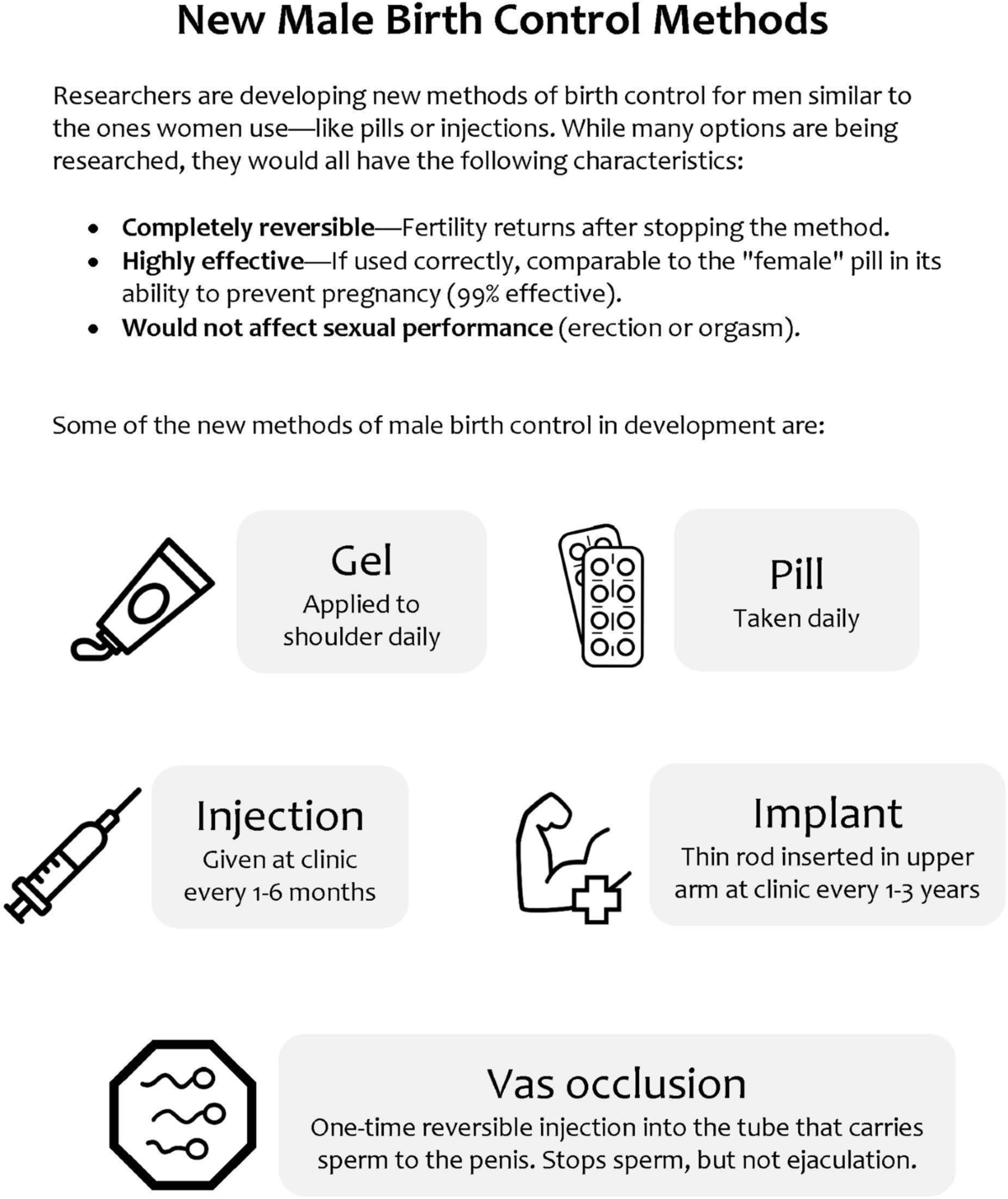
Currently, only two highly effective male contraceptive methods are widely available: condoms (with 85% typical-use effectiveness) and vasectomy (>99% effectiveness but generally permanent). This limited selection contrasts sharply with the dozen or more contraceptive options available to women, creating an imbalance in contraceptive responsibility and choice. Research indicates that 60-80% of men would be interested in using new male contraceptive methods if they were available, safe, and effective.
The development of new male contraceptive methods has been slow due to biological challenges, regulatory hurdles, and historically limited research funding compared to female contraception. Understanding male contraceptive choices encompasses knowledge of existing methods, emerging technologies, effectiveness rates, and the social and biological factors that influence male contraceptive development and adoption.
History
Ancient and Traditional Methods
Historical records document various traditional male contraceptive practices including withdrawal (coitus interruptus), herbal preparations, and temperature-based methods applied to the testicles. Ancient Egyptian, Greek, and Chinese texts reference male contraceptive techniques, though their effectiveness was generally poor and safety questionable.
19th Century: Early Condom Development
The modern condom evolved from 16th-century animal membrane sheaths to rubber condoms in the 1850s following Charles Goodyear’s vulcanization process. Mass production began in the late 1800s, making condoms more widely available and affordable, though quality and reliability remained inconsistent.
Early 1900s: Latex Innovation
The development of latex condoms in the 1920s dramatically improved comfort, reliability, and effectiveness. This period also saw the first scientific studies of condom effectiveness and the beginning of quality control standards for manufacturing.
1950s-1960s: Vasectomy Modernization
Surgical techniques for vasectomy were refined and standardized, making the procedure safer and more accessible. The no-scalpel vasectomy technique, developed in China and introduced globally in the 1970s, further improved safety and reduced complications.
1970s: Hormonal Research Begins
Early research into male hormonal contraception began with studies of testosterone’s effects on sperm production. Initial trials with testosterone alone showed promise but revealed the need for additional hormones to achieve reliable contraceptive effects without unacceptable side effects.
1990s-2000s: WHO Trials
The World Health Organization sponsored large-scale clinical trials of hormonal male contraception using testosterone combined with progestins. These studies demonstrated feasibility but highlighted challenges with side effects, injection frequency, and cultural acceptability.
2010s-Present: Diverse Approaches
Contemporary research has diversified beyond hormonal methods to include reversible vas occlusion, non-hormonal drugs targeting sperm function, immunological approaches, and novel delivery systems. Multiple methods are now in various stages of clinical development.
Current Available Methods
Male Condoms
Condoms remain the most widely used male contraceptive method, providing both pregnancy prevention and STI protection. Modern condoms are made from latex, polyurethane, or synthetic materials, with typical-use effectiveness of 85% and perfect-use effectiveness of 98%. They require no prescription and are readily available worldwide.
Vasectomy
Vasectomy is a minor surgical procedure that blocks the vas deferens, preventing sperm from mixing with semen during ejaculation. It’s over 99% effective and considered permanent, though reversal is possible but not guaranteed to restore fertility. Vasectomy is the most cost-effective long-term contraceptive method for couples certain about not wanting children.
Withdrawal (Coitus Interruptus)
Withdrawal involves removing the penis from the vagina before ejaculation. While widely practiced globally, it has limited effectiveness (78% typical use, 96% perfect use) due to pre-ejaculatory fluid containing sperm and the difficulty of perfect timing. It requires no cost or preparation but offers no STI protection.
Fertility Awareness Methods
Some couples use male involvement in fertility awareness, where men track their partner’s fertile periods and abstain or use barrier methods during those times. While technically female-focused, male participation and cooperation are essential for effectiveness, which ranges from 76-88% depending on the specific method used.
Emerging Hormonal Methods
Testosterone-Based Approaches
Hormonal male contraception typically involves suppressing the hormones that stimulate sperm production (FSH and LH) while replacing testosterone to maintain normal male physiology. Current approaches include testosterone combined with progestins or GnRH analogs, administered via injections, gels, or implants.
DMAU (Dimethandrolone Undecanoate)
DMAU is an experimental oral male contraceptive that combines androgenic and progestogenic activities in a single compound. Early studies show promise for effective sperm suppression with once-daily dosing, though longer-term safety studies are ongoing to evaluate potential effects on liver function and cardiovascular health.
11β-MNTDC
11β-methyl-19-nortestosterone dodecylcarbonate is another oral hormonal contraceptive candidate that showed effective sperm suppression in phase I trials. This compound is designed to minimize liver metabolism while maintaining contraceptive effectiveness and acceptable side effect profiles.
Combination Injectable Regimens
Various combinations of long-acting testosterone with progestins or GnRH antagonists are being tested to optimize effectiveness while minimizing injection frequency. These approaches aim to achieve reliable azoospermia (absence of sperm) or severe oligozoospermia (very low sperm counts) in 90%+ of users.
Non-Hormonal Approaches
Reversible Inhibition of Sperm Under Guidance (RISUG)
RISUG involves injecting a polymer gel into the vas deferens that damages sperm as they pass through, effectively sterilizing them without blocking sperm flow. Developed in India, this method shows promise for long-term reversible contraception, with effects lasting 10+ years and potential reversal through gel dissolution.
Vasalgel
Vasalgel is a polymer gel similar to RISUG being developed in the United States. Injected into the vas deferens, it blocks sperm passage while allowing other seminal fluid components to pass through. Animal studies show excellent contraceptive effectiveness with potential for reversal through gel removal or dissolution.
Adjudin and Sperm Function Inhibitors
Adjudin is a compound that disrupts sperm cell adhesion in the testes, causing premature sperm release and infertility. While showing promise in animal studies, human trials have been limited due to concerns about reversibility and potential long-term effects on testicular function.
Heat-Based Methods
Controlled testicular heating through specialized devices or ultrasound can temporarily suppress sperm production. While effective in reducing sperm counts, practical challenges include device comfort, treatment duration, and ensuring adequate but not excessive temperature elevation to avoid permanent damage.
Immunological Approaches
Sperm Antigen Vaccines
Immunological contraception involves creating antibodies against sperm proteins essential for fertilization. Target antigens include sperm surface proteins involved in egg binding and penetration. While conceptually promising, achieving adequate antibody levels while maintaining reversibility remains challenging.
Zona Pellucida Vaccines
Some research focuses on immunizing men against zona pellucida proteins (the egg’s protective layer), preventing sperm-egg binding. However, cross-reactivity concerns and the need for booster immunizations complicate this approach.
Contraceptive Efficacy and Reversibility
Immunological methods must balance achieving adequate contraceptive effectiveness (requiring robust immune responses) with maintaining reversibility (requiring immune response decline when contraception is no longer desired). Immunological contraception research continues exploring these challenging requirements.
Barriers to Development
Biological Challenges
Male reproductive biology presents unique challenges for contraceptive development. Men produce millions of sperm daily, requiring 90%+ suppression for reliable contraception. The blood-testis barrier complicates drug delivery, and sperm production cycles mean effects take 2-3 months to manifest and reverse.
Safety and Side Effect Concerns
Regulatory agencies require extensive safety data for male contraceptives, as they’re intended for healthy men without medical need for treatment. Acceptable side effect profiles for male contraceptives are debated, with some arguing standards should match those applied to female contraceptives.
Funding and Research Priorities
Historically, contraceptive research has focused primarily on female methods, with limited funding for male contraceptive development. Pharmaceutical companies have been reluctant to invest due to perceived market uncertainties and regulatory challenges.
Cultural and Social Barriers
Cultural attitudes about masculinity, reproductive responsibility, and gender roles influence male contraceptive acceptance. Some societies view contraception as primarily a female responsibility, while others embrace shared reproductive responsibility between partners.
Global Patterns and Cultural Perspectives
Regional Variation in Male Contraceptive Use
Male contraceptive use varies dramatically worldwide, from over 40% in some European countries to less than 10% in parts of sub-Saharan Africa and Asia. Cultural factors, availability, education, and economic considerations all influence adoption patterns.
Condom Use Patterns
Condom use is highest in regions with high HIV prevalence and comprehensive sexual education programs. However, consistent use remains challenging due to cultural resistance, partner negotiation difficulties, and concerns about reduced sexual pleasure.
Vasectomy Acceptance
Vasectomy rates vary significantly by culture and socioeconomic status. Countries like New Zealand and Canada have high vasectomy rates, while religious or cultural beliefs about permanent sterilization limit acceptance in other regions.
Attitudes Toward New Methods
Surveys consistently show high interest in new male contraceptive methods across diverse populations, with 60-80% of men expressing willingness to use safe, effective, reversible male contraceptives. Interest is highest among educated, urban populations in committed relationships.
User Preferences and Acceptability
Method Characteristics
Research on user preferences indicates that ideal male contraceptives should be highly effective (>95%), readily reversible, have minimal side effects, not interfere with sexual pleasure, and be affordable. Men generally prefer methods that don’t require daily attention or frequent medical visits.
Partner Involvement
Female partner attitudes significantly influence male contraceptive adoption, with supportive partners increasing likelihood of use. Couples often make contraceptive decisions jointly, highlighting the importance of educating both partners about new male methods.
Provider Attitudes
Healthcare provider knowledge and attitudes about male contraception influence patient access and counseling quality. Many providers lack training in male reproductive health and may not actively discuss male contraceptive options with patients.
Demographic Factors
Younger, more educated men with higher incomes are generally more interested in new male contraceptive methods. Men in committed relationships show higher acceptance than single men, while those with completed families often prefer permanent methods like vasectomy.
Regulatory and Development Challenges
Clinical Trial Design
Male contraceptive trials face unique challenges including defining appropriate endpoints (azoospermia vs. oligozoospermia), determining adequate trial duration, and establishing reversibility criteria. Ethical considerations around pregnancy outcomes in partners complicate study design.
Regulatory Pathways
Regulatory agencies worldwide are developing frameworks for evaluating male contraceptives, balancing safety requirements with recognition that existing female methods have established risk-benefit precedents. Harmonization between regulatory agencies remains incomplete.
Manufacturing and Distribution
Successful male contraceptive introduction requires manufacturing scale-up, quality control systems, and global distribution networks. Cost considerations are particularly important for methods intended for widespread use in developing countries.
Post-Market Surveillance
Long-term safety monitoring will be essential for new male contraceptives, particularly regarding reversibility, fertility recovery, and potential long-term health effects. Establishing robust pharmacovigilance systems presents logistical challenges.
Economic Considerations
Cost-Effectiveness Analysis
Economic analyses suggest that effective male contraceptives could be highly cost-effective by preventing unintended pregnancies and reducing healthcare costs. Long-acting methods like vasectomy show excellent cost-effectiveness compared to female methods requiring ongoing costs.
Market Potential
The global male contraceptive market is estimated to be worth billions of dollars, with particular potential in developed countries where men are willing to pay for convenient, effective methods. Pricing strategies must balance profitability with accessibility.
Healthcare System Impact
Introducing new male contraceptives requires healthcare system adaptations including provider training, counseling protocols, and integration with existing family planning services. Systems must accommodate both individual and couple-based contraceptive counseling.
Future Directions and Timeline
Near-Term Prospects (2025-2030)
Several hormonal methods may complete clinical trials and seek regulatory approval within the next 5 years, including oral options and long-acting injectables. Vasalgel and similar reversible vas occlusion methods may also reach market during this timeframe.
Medium-Term Developments (2030-2040)
Non-hormonal approaches targeting sperm function, immunological methods, and novel delivery systems may mature during this period. Combination approaches using multiple mechanisms simultaneously could offer improved effectiveness and acceptability.
Long-Term Innovation
Future developments may include genetic approaches, nanotechnology-based delivery systems, and personalized contraception based on individual genetic and physiological profiles. Next-generation male contraceptive technologies could revolutionize reproductive control for men.
Global Access Considerations
Ensuring global access to new male contraceptive methods will require addressing cost, cultural barriers, and healthcare infrastructure limitations. International cooperation and funding will be essential for widespread implementation, particularly in developing countries.
Frequently Asked Questions
When will new male contraceptive methods be available?
Several methods are in late-stage clinical trials, with some potentially reaching market by 2027-2030. However, regulatory approval timelines are uncertain, and methods may initially be available only in specific countries or healthcare systems before broader rollout.
Are hormonal male contraceptives safe?
Current research suggests hormonal male contraceptives have acceptable safety profiles similar to female hormonal methods, with side effects including mood changes, weight gain, and acne. Long-term safety studies are ongoing to evaluate cardiovascular and other health effects.
Will male contraceptives affect sexual performance?
Most male contraceptive methods in development are designed to preserve sexual function and libido. Some hormonal approaches may initially affect sexual desire, but formulations are being optimized to minimize these effects while maintaining contraceptive effectiveness.
How quickly are male contraceptives reversible?
Reversibility depends on the method. Hormonal methods typically require 3-6 months for sperm production to normalize after discontinuation. Non-hormonal methods like vasalgel are designed for more rapid reversibility, potentially within weeks to months.
Why has male contraceptive development been so slow?
Development has been slow due to biological challenges (male reproductive complexity), limited research funding compared to female methods, regulatory hurdles, and pharmaceutical industry concerns about market acceptance and liability.
Would men actually use new contraceptive methods?
Surveys consistently show 60-80% of men express interest in new male contraceptive options, with highest acceptance among younger, educated men in committed relationships. Actual adoption will depend on method characteristics, cost, and cultural factors.
How effective is male contraception?
For widespread acceptance, male contraceptives likely need effectiveness rates of 95% or higher, comparable to female hormonal methods and IUDs. Lower effectiveness rates may be acceptable for some users when combined with partner methods or in specific circumstances.